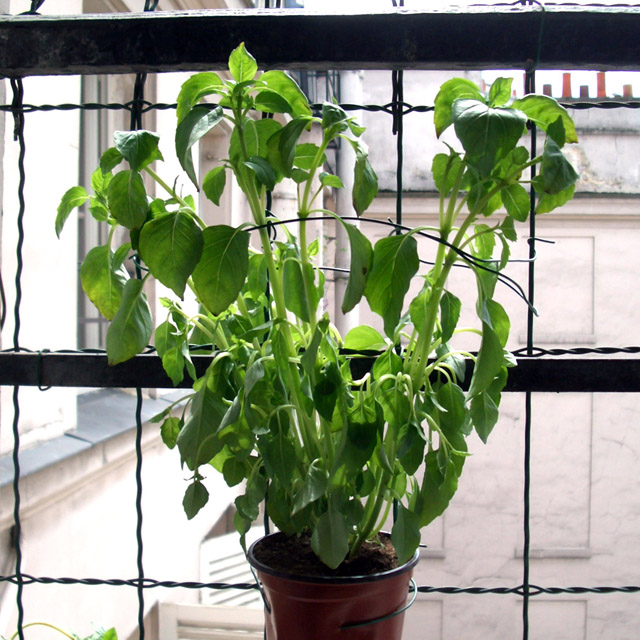
 Team, we need differential diagnostic, NOW:
Patients #1, #2, #3 and #4 – a family – let’s call them the Lamiaceaes, were admitted in mid-April: sharing a rather small room, but healthy and showing no sign of infection. They were kept indoors and put on a steady diet of H2O, administered twice daily.
Within days following their admission, they showed signs of discomfort: all limbs progressively went numb, patients could no longer stand upright without assistance. Their health deteriorated exponentially over the course of a week. Finally, patients #1, #2 and #3 all underwent cardiac arrest, followed by acute dehydration, to be declared clinically dead on the seventh day after several failed attempts at resuscitation. Patient #4, youngest member of the family, entered a vegetative state but, in the end, miraculously survived: he emerged from his coma a few weeks later and has been making such an encouraging recovery ever since that doctors have allowed his relocation to the outdoor patio.
It was diagnosed at the time that overcrowding of their room, conjugated with possible lack of fresh air may have caused the sudden and unexpected death of all but one of the Lamiaceaes. Endemic condition or residual infection caught at their previous place of residence was not completely excluded, albeit impossible to prove and somewhat invalidated by the survival of the weakest family member.
Patient #5, whom we shall call Basil, a large-sized fully-grown adult, was admitted two days ago.